



Blog Insights
Deep insights on engineering, architecture, AI and building software that performs in the real world. Practical lessons from enterprise AI infrastructure projects.
Articles

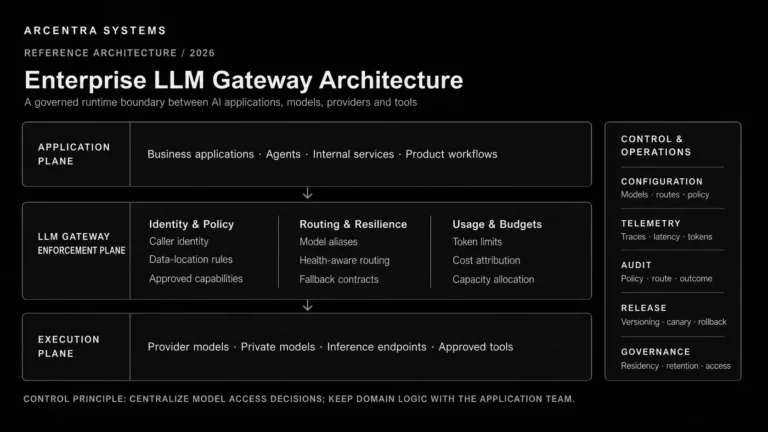
The Enterprise LLM Gateway Is the New Control Plane
Enterprise AI Systems, Explained — Part 4 The first application rarely needs an LLM gateway. A team can call a model provider directly, keep the API key in a secret store, add a timeout and ship. For one application, that is often the correct architecture. The trouble starts when the same pattern is repeated across […]

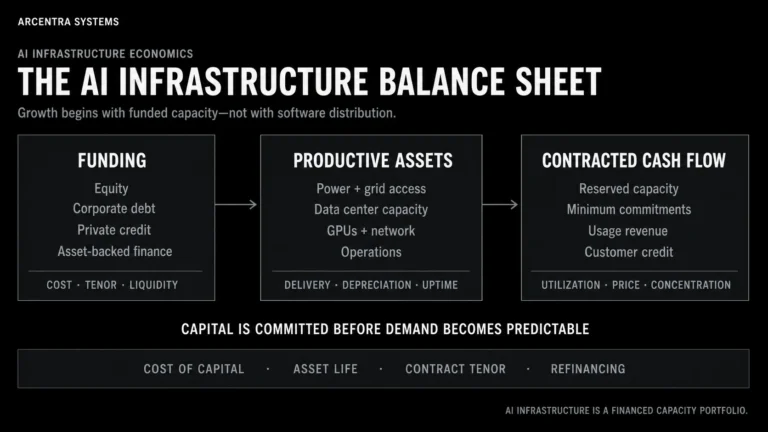
Why AI Infrastructure Looks More Like Banking Than Startups
AI infrastructure is usually described with the language of technology: GPU generations, cluster size, interconnect, tokens per second and model performance. Its economics are governed by a different vocabulary: capital cost, asset life, contract tenor, utilization, counterparty concentration, collateral value and refinancing. A software startup can add users before it has perfected monetization because distribution […]

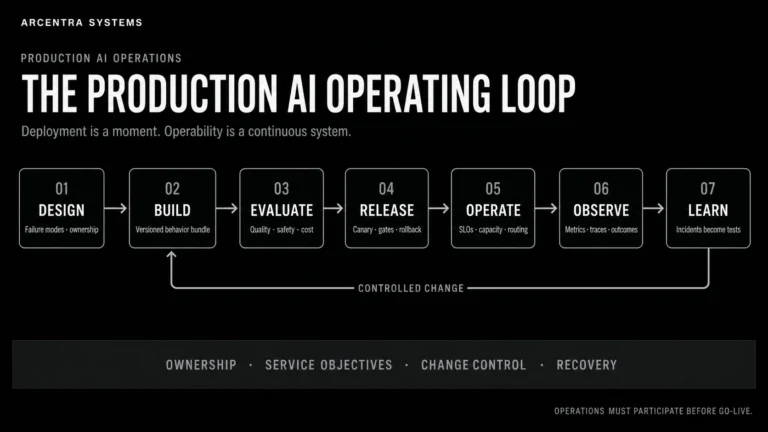
Building AI That Operations Can Actually Support
A successful deployment proves that an AI system can run under one configuration, with one set of dependencies, at one point in time. It does not prove that the system can be supported through provider throttling, prompt releases, stale retrieval indexes, tool failures, cost spikes or partial business transactions. That distinction is the boundary between […]

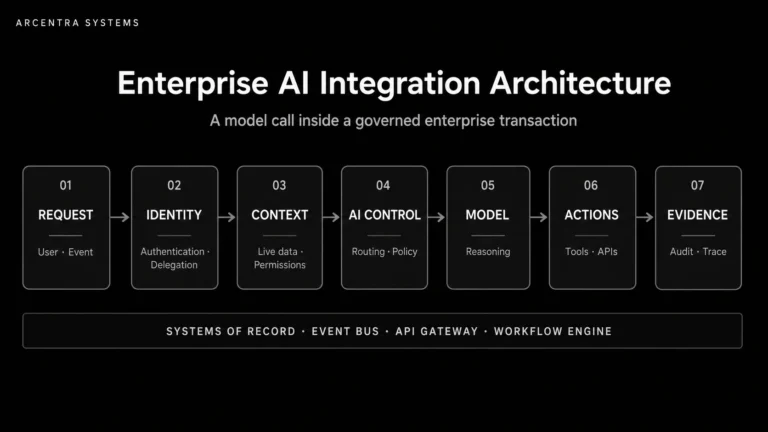
AI Integration Is Harder Than AI Itself
Enterprise AI projects are often framed as model-selection exercises. Teams compare reasoning quality, context windows, latency and price, then assume implementation begins once a provider has been chosen. In practice, a capable model is usually the easiest component to replace. The difficult work begins when an AI system must operate inside the enterprise: use live […]

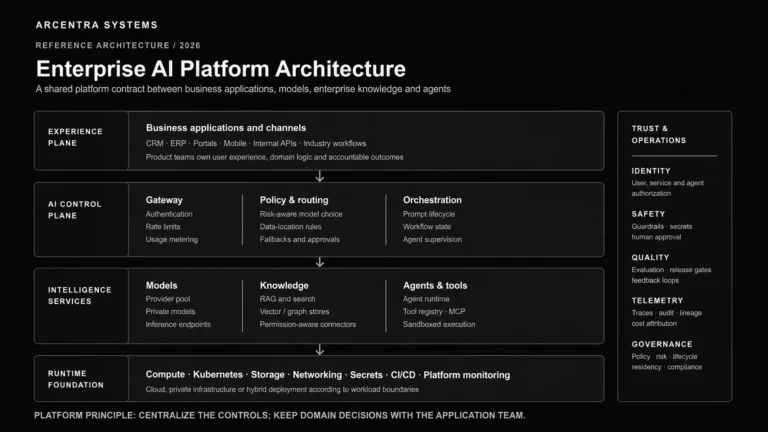
AI Infrastructure Is Becoming the New Enterprise Platform
For two decades, the center of enterprise architecture was comparatively stable. ERP systems managed resources and transactions. CRM systems organized customer relationships. Integration platforms moved data between applications. Data warehouses consolidated analytics, while API gateways exposed internal services through consistent contracts. Those systems remain essential. But another shared layer is forming beside them: enterprise AI […]